How to Talk to a Child's Teacher About Reading Concerns
Come prepared with specifics to turn concerns into actionable plans.
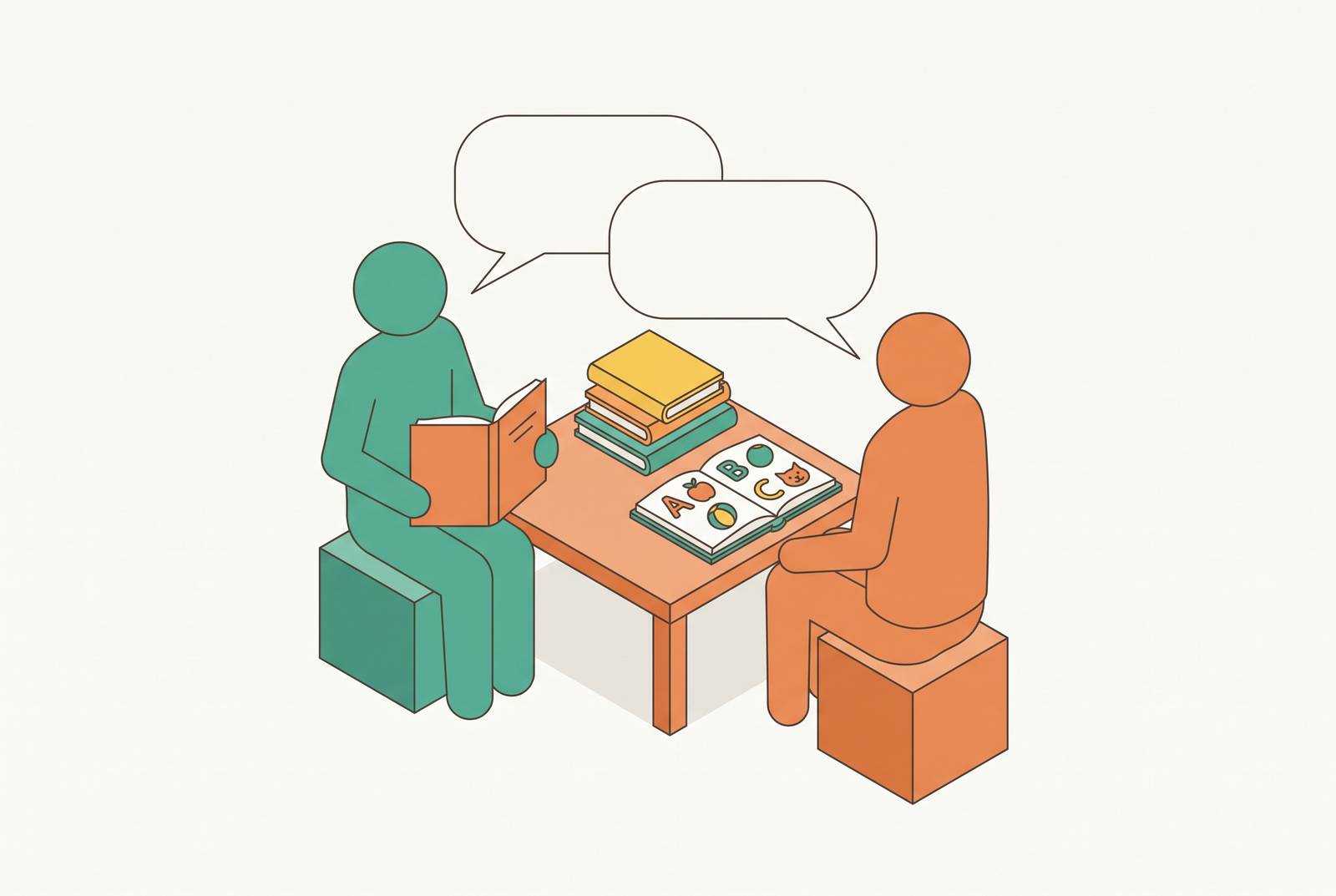
Talking to a child's teacher about reading works best when parents show up prepared, ask sharp questions, and treat the whole thing as a partnership rather than a complaint session. Most parents sit on a reading concern longer than they should. The hesitation is not laziness or denial, it is something closer to social math: nobody wants to sound alarmist, nobody wants to be the parent who overreacts, and nobody wants to hand a teacher a problem and get a shrug in return. Much of that hesitation traces back to a specific fear, the worry of seeming accusatory, and the Child Mind Institute frames the fix simply, as showing the teacher you're not coming from a place of blame but from concern for your child.
That math is expensive. Decoding troubles do not sit still while a parent waits for the right moment. According to NWEA research, early identification and targeted intervention work best before a child is actually falling behind, and screening can catch risk factors even before a child can read a single word. That timing detail matters more than it sounds. It means the useful window opens earlier than most parents assume, well before report cards or test scores confirm what a gut feeling already suspected. Once a concern is flagged, the classroom teacher typically determines whether a child is struggling and then consults with the parent or guardian to put a Progress Monitoring Plan in place, designed around interventions matched to that child's specific needs.
So the reframe is simple: flagging a concern early is not alarmist, it is the correct move, and most teachers welcome it rather than resent it. The rest of this piece is about doing that well, from noticing the right things at home to keeping the conversation alive long after the first meeting ends.
What you should notice at home before you walk into the meeting
"She struggles with reading" is a feeling, not information. Teachers can't do much with a feeling. What moves a conversation forward is specificity, the exact word a child stumbled on, the page where fluency broke down, or the book he point-blank refused to open.
A few patterns are worth watching for directly. Does the child guess at words based on the picture on the page, or the general shape of the sentence, rather than sounding them out letter by letter? That's a decoding red flag. ⟦none⟧ That points to phonemic awareness. Does he read in a halting, effortful way that drains the meaning out of the sentence by the time he reaches the end, or does he tire out fast? That's fluency. And a trickier one: does the child decode the words fine, but come up empty when asked what the story was even about? That's a comprehension gap hiding behind seemingly competent reading.
Don't ignore the emotional signals either. Avoidance, frustration, a kid who suddenly decides they "hate reading" out of nowhere. Those are data points too.
Practical prep beats vague worry. Write down the specific examples, per Understood.org and lovetoknow.com, the word she got stuck on, the book he refused, or the pattern that keeps repeating itself. If the child is old enough to reflect a little, ask what feels hard, gently, without turning it into an interrogation, and bring those words into the meeting too. Gather anything the school has already sent home, assessment scores, progress notes, whatever exists, and keep it in the same folder as the observations.
How to get the right kind of meeting on the calendar
Not every concern needs the same format. Email works fine for something simple, a quick heads-up, a scheduling question. But anything with real weight, anything about how a child is actually learning, deserves a real-time conversation, a phone call or a sit-down, where a parent can ask a follow-up question on the spot instead of waiting a day for a reply.
The opening line shapes how the rest of the conversation goes. Understood.org suggests something like this: "Hi. I'm Will's mom, Gina. I'm worried about Will's reading, and I'd like to set up a time to talk about it." Direct, specific, no blame baked in. That's the tone to aim for.
Parent-teacher conferences are a natural moment to bring this up, but a real concern shouldn't wait for the conference slot on the calendar. If the concern feels urgent, it is.
There's also a longer game here. Parents who show up early in the year, at open house, in brief hallway check-ins, in a quick email of introduction before anything is wrong, make the harder conversation easier when it eventually comes, according to Boys Town Hospital. Arriving as a familiar, engaged parent changes the entire tone of a difficult meeting. Arriving as a stranger with a complaint does not.
What the teacher is likely measuring
Reading doesn't happen naturally. It has to be taught, deliberately, and the research behind how to teach it is deep, according to LiteracyPlanet and the Oklahoma Education Journal. LiteracyPlanet puts it plainly: reading is not a natural process, which is exactly why the instructional choices behind it carry so much weight https://www.literacyplanet.com/blog/science-of-reading-phonics-2025/. That single fact reframes the whole conversation: a struggling reader isn't necessarily a sign of something wrong with the child, it might be a sign that a specific piece of instruction hasn't landed yet.
The Simple View of Reading, often written as R = D × LC, is worth knowing before the meeting. Reading comprehension is the product of decoding and language comprehension, and weakness in either one drags the whole equation down. A child can decode every word on the page and still fail to understand the story. A child can understand a story read aloud and still fail to decode it independently. Different problems, different fixes.
Teachers working in Science of Reading-aligned classrooms are generally watching five components: phonemic awareness (hearing and manipulating individual sounds), phonics (connecting those sounds to letters and spelling patterns), fluency (accuracy, automatic recall, and expression together), vocabulary (word meaning and how language fits together), and comprehension (actually making meaning from text).
This isn't just academic vocabulary. Oklahoma's Strong Readers Act took effect at the start of the 2025–26 school year, requiring phonics, vocabulary, and comprehension instruction in classrooms and banning what's called three-cueing, guessing words from pictures or context instead of sounding it out, according to the Oklahoma Education Journal, and many other states have passed similar legislation. Knowing what three-cueing actually looks like in a classroom, a child glancing at an illustration to guess the next word rather than decoding it, lets a parent recognize the pattern and ask directly if it's still part of instruction.
Knowing this vocabulary changes what a parent can ask. "Is she being assessed for phonemic awareness?" and "Does the classroom use decodable texts?" are questions that signal real engagement, and they tend to get specific, useful answers back, instead of a vague reassurance.
The questions that move the conversation forward
Curiosity gets further than accusation, every time. "Can you help me understand what you're seeing?" opens a door. "Why isn't this working?" closes one. The goal of the meeting is information.
Start with where the child actually stands. Check where he falls relative to grade-level expectations. Ask which of the five reading skills, phonemic awareness, phonics, fluency, vocabulary, comprehension, the teacher is most focused on right now. Ask whether she's been screened for decoding difficulties or gaps in phonemic awareness.
Then move to instruction itself. What approach does the classroom use, and is it aligned to the Science of Reading? Is he working with decodable texts, meaning books built specifically around the phonics patterns he's already learned, rather than books that rely on guessing? How is phonics instruction sequenced across the year?
Finally, get to support. What intervention exists if a child falls behind? Is there a reading specialist worth a separate conversation? What, specifically, can happen at home that reinforces what's happening in class, rather than working against it or duplicating it badly?
Every answer deserves a follow-up if it raises more questions than it answers, per Understood.org's guidance to stay clear, specific, and willing to push a little further. And take notes during the meeting itself. Details fade fast once the conversation ends, and a written record is what makes the next conversation sharper than this one.
When the teacher pushes back or the conversation stalls
Some meetings hit friction. A teacher hesitates, or seems reluctant to commit to a change. That's worth staying calm about, and worth getting curious about before pressing harder. Teachers often hold back for reasons that have nothing to do with a parent's specific child: fairness concerns across a full classroom, limited time, limited resources, or genuine uncertainty about what a requested change would actually require, according to sfmindmatters.com.
Small asks tend to land better than big ones. Suggest one manageable change and watch what happens. A teacher who sees a small adjustment actually work is far more likely to commit to something bigger next time, per sfmindmatters.com.
Both people in that room want the same outcome. "Both of you are there because you want to support your kids," according to the Child Mind Institute. Returning to that shared purpose, out loud if needed, tends to defuse friction faster than pushing a point harder.
If the conversation genuinely goes nowhere, there's a next step. A reading interventionist or a special education teacher can run an independent assessment and help bridge the gap between what a parent sees and what a teacher reports, according to readingrev.com Oklahoma Education Journal. Readingrev.com frames this as connecting with a qualified reading specialist, noting that the right support might come from a reading interventionist, a special education teacher, or a private literacy specialist https://readingrev.com/blog/7-tips-for-parents-take-action-when-your-child-is-struggling-with-reading. Escalating to that level isn't a failure of collaboration. It's simply the next rung on a support ladder that already exists inside the school system, built for exactly this situation.
How to keep the progress visible after the meeting ends
⟦none⟧ That single question turns a meeting into a plan instead of a moment.
Ask for whatever data the teacher is already tracking, assessment scores, observation notes, records from any intervention already underway.
Keep a parallel log at home. What's the child reading, what words trip them up, has confidence shifted in either direction since the meeting? That's the half of the picture a teacher can't see from inside the classroom, and it's genuinely useful data, not just a parent's personal reassurance.
Set the next touchpoint before walking out the door, rather than letting it drift, a short email update in four weeks, a follow-up call at the midpoint of the term. Waiting for a problem to resurface on its own means losing the early window all over again.
This kind of visibility isn't just bookkeeping. Research on early numeracy has found that a parent's own beliefs and expectations shape how a child comes to see themselves as a learner Oklahoma Education Journal. A parent staying informed and engaged isn't just tracking progress from the sidelines, it's actively shaping how the child feels about their own ability. And if home practice becomes part of the plan, keep it short and low-stakes. A child who experiences reading as punishment will fight it. A child who feels backed, rather than tested, generally won't.
What to do at home between now and the next conversation
Home practice works best when it echoes the classroom instead of competing with it. If phonics is the current focus, reach for decodable books built around those exact patterns. If fluency is the goal, read aloud together and trade off sentences.
Guided repeated oral reading is one specific method worth trying. A parent models a sentence, the child reads it back, and the pattern shifts gradually toward the child reading independently, following what NWEA describes as an "I read, then you read" structure. Simple to do, and it directly targets the fluency gap without turning practice into a lecture.
Make it feel like play wherever possible. Rhyming games, clapping out syllables, silly word swaps. None of that is a distraction from the real work. It's what actually makes the skill stick, because a child engaged in a game absorbs far more than a child grinding through a worksheet.
A one-on-one AI reading tool that listens to a child read aloud and adjusts in real time, not a quiz app, not a static library of stories, but something built to function the way an attentive teacher sitting right next to the child would, is one option worth considering. The kind of tool that can tell whether a stumble comes from a phonemic awareness gap, a decoding issue, or a fluency breakdown, and shifts its instruction accordingly, on the spot.
The meeting with the teacher is one conversation, held once every few weeks at best. The real work, the hours of actual reading practice that happen in between, is where most of the growth quietly takes place.
Sources
- Science of Reading in 2025: Why Phonics Still Matters
- The Science of Reading: What Is It and How Does It Inform Literacy Instruction? | Published in Oklahoma Education Journal
- What the science of reading tells us about how to teach decoding—including phonics - Teach. Learn. Grow.
- Supporting fluency and comprehension using practices grounded in the science of reading - Teach. Learn. Grow.
- How to Work Well With Your Child’s Teacher - Child Mind Institute
- Reading trouble: Conversation starters to use with your child’s teacher
- Seeking Help for a Struggling Reader: 8 Steps for Parents | Reading Rockets
- Approaching Your Child's Teacher | Boys Town National Research Hospital