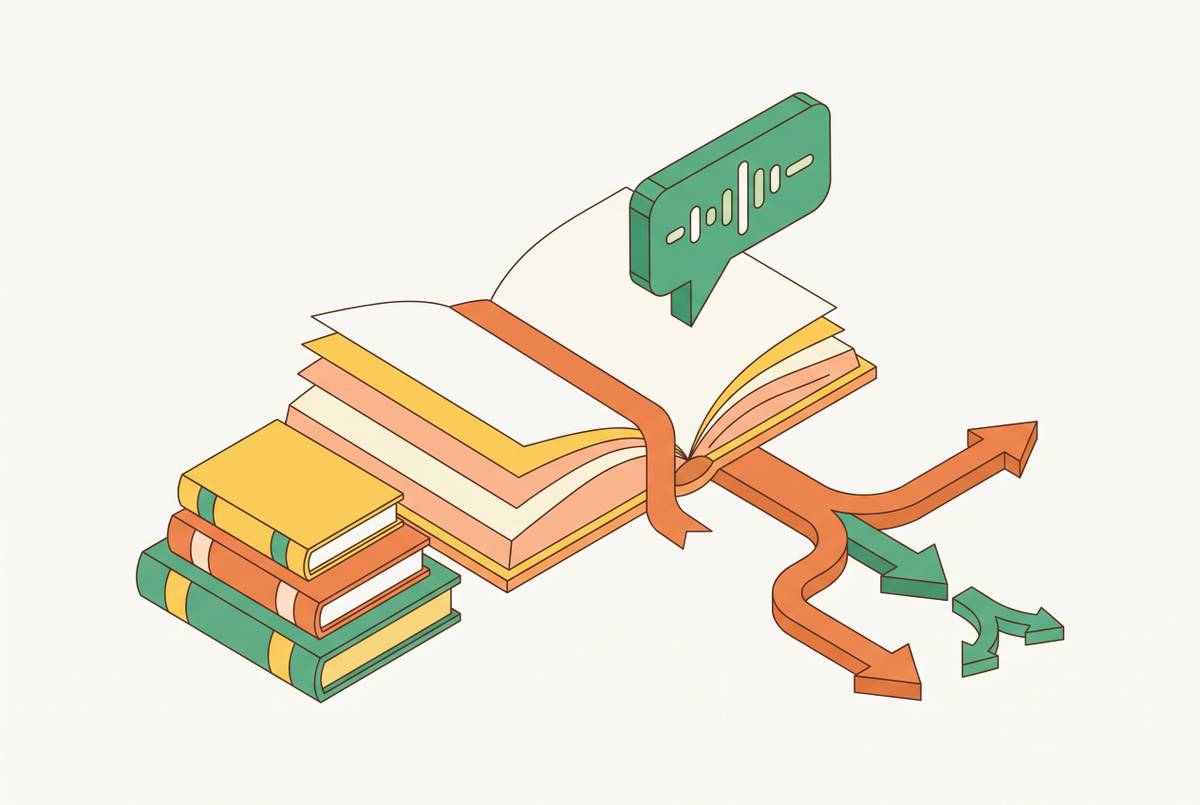
Decodable Book Libraries Inside Reading Apps
Digital libraries deliver decodable books matched to each child's exact skill level and pace.
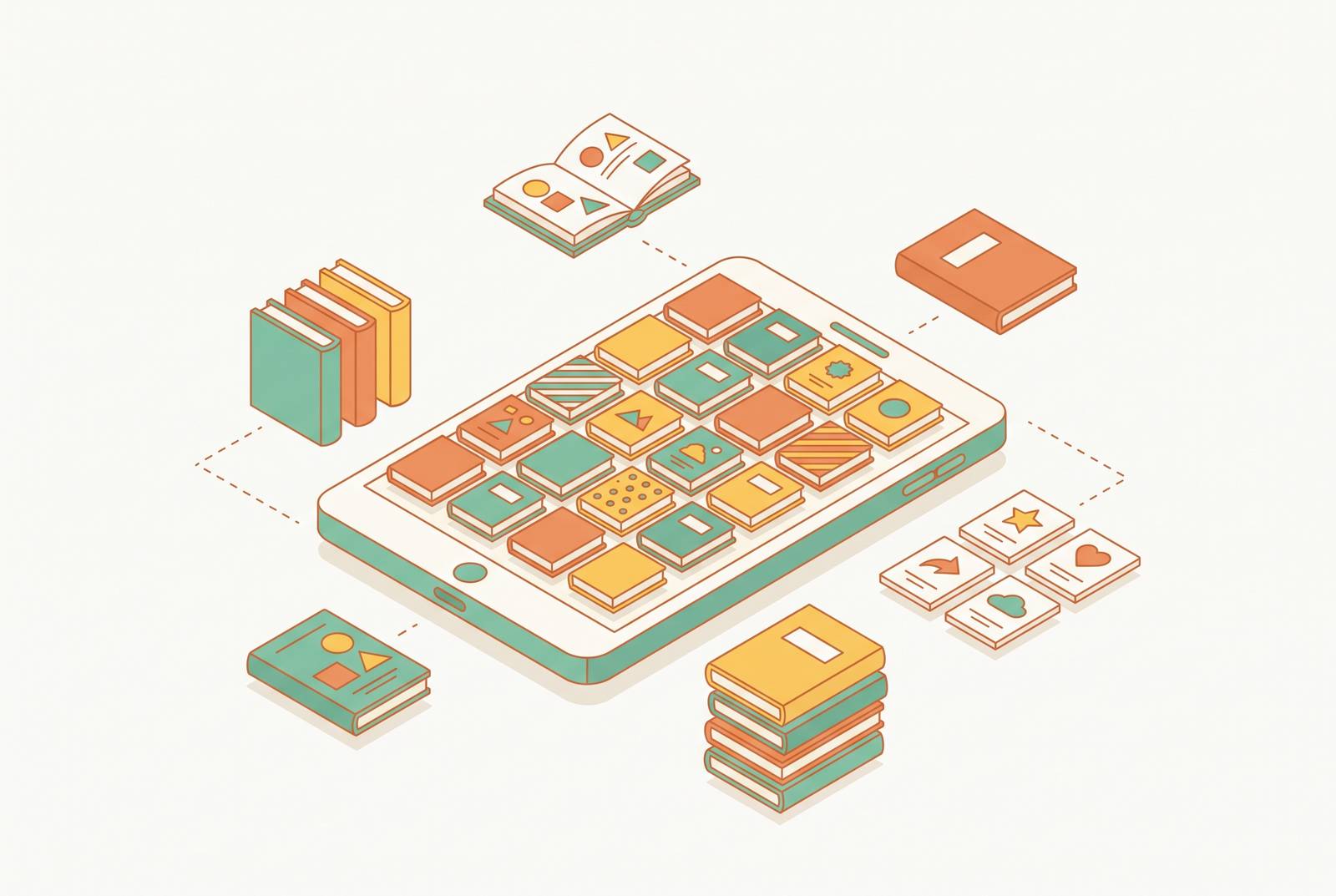
Forty states plus Washington, D.C. now enforce Science of Reading laws, and reading scores still fell for both fourth and eighth graders on the 2024 NAEP. That gap between what the law requires and what children actually score tells you something important: adopting better methods on paper is not the same as putting better instruction in front of a child. Louisiana is the only state that has climbed back above its pre-pandemic fourth-grade reading levels.
A law takes effect the day it's signed. A classroom doesn't change that fast. Passing a Science of Reading mandate doesn't instantly change what a child encounters when she opens a book at her desk, because the materials have to catch up, and so does the practice time built around them. That lag is where this piece spends its attention: not whether the Science of Reading works, but what it takes to actually deliver it once the policy has been signed.
What decodable books do inside a child's developing brain
A decodable book works on a simple mechanical principle: it forces a child's brain to connect letters to sounds over and over, until that connection fires without conscious effort. Skilled readers recognize most words instantly, pulling them from memory the way you'd recognize a friend's face. That instant recognition is built by decoding through the word, sound by sound, enough times that the brain stops needing to, not by memorizing what a word looks like or guessing from the picture next to it.
A decodable book is engineered around that fact. Most of its words use phonics patterns the child has already been taught, mixed with a small number of high-frequency sight words she's expected to know on sight. Nothing in the text should surprise her into guessing. That constraint sounds small, but it's the entire point: a book that's too hard pushes a child back toward the picture, the shape of the word, the first letter and a shrug. A decodable book closes that door.
More than a dozen states have explicitly banned "three-cueing," the practice of teaching kids to guess words from pictures, context, or sentence structure instead of sounding them out, because decodable books depend on the opposite habit. Decodable books are the direct antidote to that habit. The chain runs in one direction: decoding practice builds accuracy, accuracy repeated across many texts becomes fluency, and fluency frees up the mental bandwidth a child needs to actually think about what she's reading instead of just getting through it. A child who's fighting every third word has no attention left for meaning. A child who isn't fighting does.
There's a confidence effect here too, and it isn't soft or incidental. A child who picks up a book and can actually read what's on the page, without guessing and without a parent jumping in to rescue her, starts to believe she's a reader. Teachers report the shift directly: children who used to lean on picture guessing begin sounding out unfamiliar words successfully, that small, repeated success builds on itself, and the confidence that results is the instruction working as designed, not a bonus outcome tacked onto it.
Why sequencing is the non-negotiable design requirement
A decodable book only does its job if it arrives at the right moment. If a child is handed a book built around vowel teams before she's been taught vowel teams, the "decodable" label stops meaning anything. It's just another book full of words she can't sound out, which puts her right back in guessing mode.
Sequencing is the whole structure a decodable library depends on, not a nice-to-have feature. A real sequence moves in deliberate stages: simple vowel-consonant and CVC words first, then digraphs and blends, then more complex patterns like vowel teams, r-controlled vowels, and multisyllabic words. Brenda Tejeda's 100-book decodable bundle lays this progression out concretely: ABC books, then CVC short-vowel books, then digraphs and glued sounds and double-consonant books, then blends, then VCE, multisyllabic words, r-controlled vowels, and finally vowel teams and diphthongs. Each stage builds directly on the last. If a stage is skipped, the next book stops being decodable for that child, no matter what the label on the cover says.
Sequencing also has to bend around the child in front of it rather than the calendar. Take a third grader reading at a kindergarten level. The sequence has to start where she actually is in her skills, not where a grade-level chart says a third grader should be. A library stocked only with on-grade texts simply doesn't work for her. For a child who is behind, a library that offers nothing below grade level fails her completely. Purpose-built reading apps that sequence their decodable libraries dynamically, matching each child to the next appropriate text based on live assessment rather than grade or calendar, solve exactly this problem at scale, without requiring a teacher to have the time, the diagnostic data, and a perfectly stocked shelf all lined up at once.
A fair objection follows: can't a good teacher just hand-pick the right book from any library, regardless of how it's sequenced? Sure, in principle. But that requires the teacher to have time, diagnostic data on exactly where each child stands, and a library deep enough to have the right book waiting at every single skill level. Most classrooms don't have all three at once, and home practice without a teacher present is even less reliably sequenced. Sequencing doesn't improve just because an adult is well-intentioned. It has to be built into the system itself.
What digital delivery adds to a decodable library
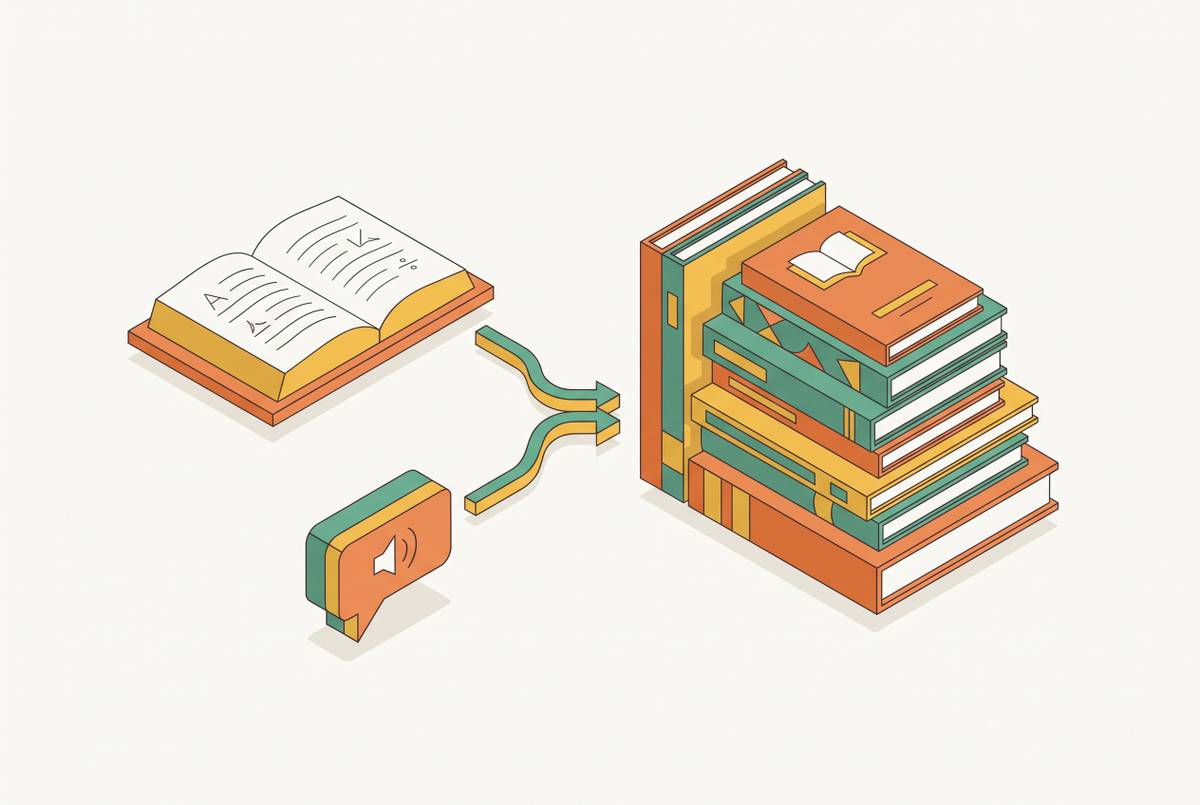
Moving decodable books into an app isn't a cosmetic upgrade. It solves access problems that a stack of print books simply cannot. A digital library can advance a child to the next level the moment she's ready, offer audio scaffolding the instant she gets stuck, and surface or generate new stories matched to her specific interests. A shelf of paperbacks can't adjust itself overnight based on how a child read yesterday.
But digital delivery doesn't automatically solve the problems that matter most. A perfectly sequenced library of decodable texts sitting inside an app is still inert if the child gets placed at the wrong level to begin with. Digitizing a library doesn't replace the need for real assessment behind it. And even with the best app in a child's hands, a parent's presence and encouragement remain the strongest predictor of whether that practice actually sticks. Co-use with a parent is still the top protective factor, even once the book lives on a screen instead of a shelf.
That leaves a real gap between what an app could do and what simply loading decodable texts into one actually does. Dropping a decodable library into an app format isn't enough on its own. The app needs a system wrapped around that library, one that places the child correctly, tracks her progress as she reads, and responds the moment she struggles. Without that system, digitizing the books just moves the same unsolved placement and feedback problems onto a screen.
The three things that separate a teaching system from a digital shelf of PDFs
An in-app decodable library only earns the label "teaching tool" if it does three things no static PDF collection can do: place the child accurately, respond to her in the moment she's reading, and advance her at the right pace.
Placement comes first, and it has to be built on real skill diagnosis, not a grade-level guess. The library needs assessment behind it that identifies exactly which phonics skills a child has mastered and which she hasn't, down to the skill, not the grade band. Without that layer, a parent or teacher is left guessing which book to hand over next, which is exactly the problem decodable books were built to eliminate. Just Right Reader builds this layer in directly, describing its approach as data-driven packs personalized for practice at school, at home, and everywhere in between. That data layer is what turns a library into something more than a catalog of titles.
Real-time feedback comes second. When a child misreads a word, what happens in the next three seconds matters enormously. A red X or silence teaches her nothing. What she needs is an immediate, instructional response, one that points her back to the specific sound-spelling relationship she missed. Built-in audio offers a genuine safety net that a printed book can't provide, but there's a real difference between audio that just reads the word aloud for her and audio that models the sound, then asks her to try again herself. An app that listens to a child read and reacts to her specific errors as they happen is doing something fundamentally different from an app that just displays text with a tap-to-hear button next to it.
Adaptive advancement comes third. A library needs enough titles at each skill level that a child can practice a skill until it's actually fluent, rather than just until she's technically seen it once. Really Great Reading built its eBook library around exactly this principle, structuring it so students practice only the skills they've already been taught, with multiple titles available at each skill level. The system also has to recognize when a child has mastered a level and needs to move on. Holding her at a level she's already conquered damages motivation just as much as pushing her somewhere too hard. Deciding what to teach next, how to teach it, and when to move her forward, moment to moment rather than on a fixed schedule, is what actually separates a genuine AI teaching system from a well-organized shelf of digital books.
How Ello and other app-based approaches measure up
Ello is built as an AI teacher rather than a digital library with an audio button attached. It listens to a child read aloud in real time, picks up what she actually says rather than what the script expects her to say, and responds the way a skilled teacher sitting next to her would: correcting a missed sound, encouraging her through a hard word, adjusting what comes next based on how she just did. The reading curriculum behind it is grounded in the Science of Reading and built by literacy experts, researchers, and academics, rather than adapted from a general-purpose tool not designed for early reading instruction.
Placement inside Ello isn't a single quiz taken on day one and then forgotten. The system builds an evolving picture of each child's strengths, interests, and pace over time, and uses that picture to decide, moment to moment, what to teach next, how to teach it, and when to move her forward.
Ello also lets children co-create their own stories and then read them back, which gives reluctant readers a real reason to keep going while keeping the instructional sequencing intact. Parents get progress reporting along the way, which answers the visibility requirement that reliably predicts better outcomes when a parent stays engaged in a child's reading practice. The app is available on both iOS and Android, free to use, with an optional paid subscription for additional features, and carries no ads and no in-app purchases. That combination, quality instruction paired with genuinely open access rather than access gated behind a paywall, is a real standard to hold any reading app to.
Just Right Reader approaches the same problem from a different angle, and it's worth describing on its own terms. It offers a full Science of Reading phonics program built around a large library of research-based decodables available in both English and Spanish, paired with the personalized, data-driven packs described earlier for practice at school, at home, and anywhere in between. For a family or a district weighing a bilingual phonics program with a strong data layer behind placement, it's a serious, well-documented option worth evaluating against the same three criteria: accurate placement, real-time response, and pacing that adjusts to the child rather than the calendar.
The honest takeaway for any parent or educator comparing options is to run every app through those same three questions. Does it know exactly where this child's skills stand right now, not just her grade level? Does it respond to her specific mistake the moment she makes it? And does it move her forward the instant she's ready, rather than on a fixed weekly schedule? A library of decodable books, however well written, is only as good as the system built to place a child inside it correctly and keep pace with her as she grows.
Sources
- Free Decodable Readers - Access our Free Library of Books with Decodable Text — Reading Doctor | Apps for teaching kids to read and spell
- What Are Decodable Books and Why Are They Important? | Reading Rockets
- Using Decodable Books | Reading Rockets
- Decodable books: A comprehensive guide for educators and parents
- bookbotkids.com