Building Kindergarten Readiness at Home When Your Toddler Is Not yet in Preschool
Daily sound games, shared books, and counting build readiness.
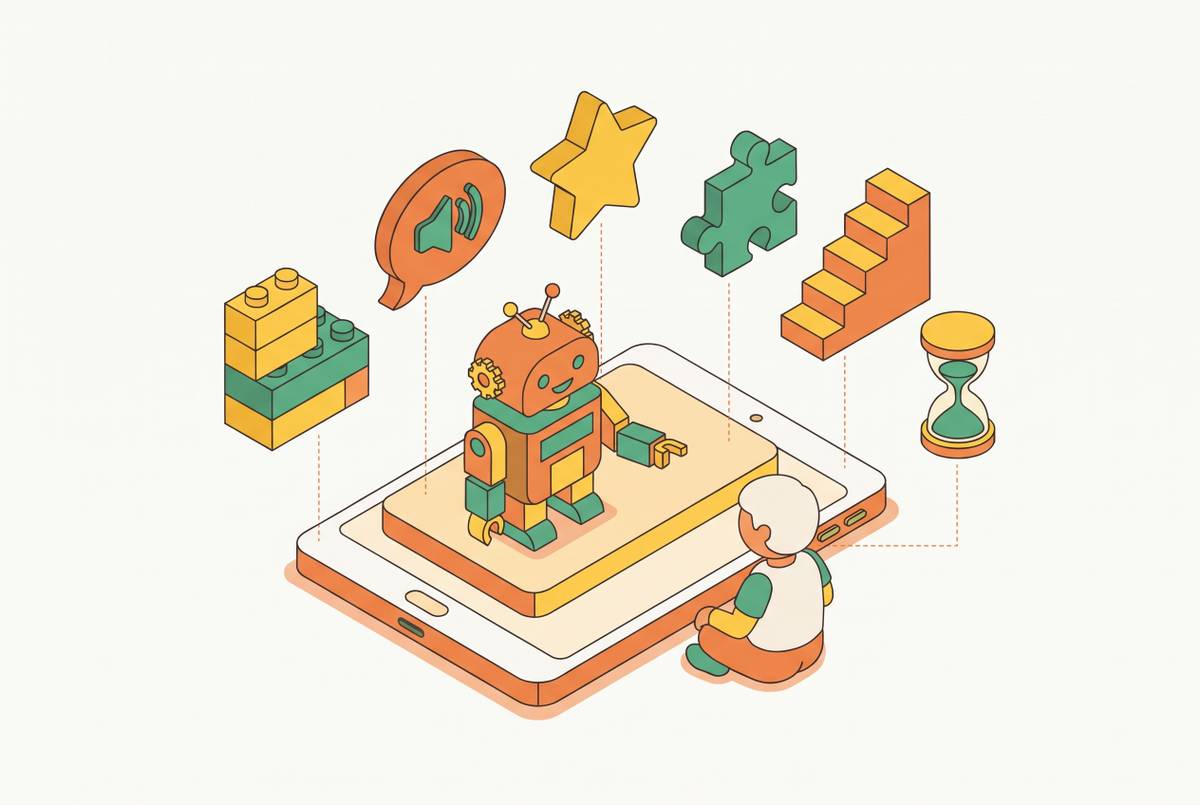
Children can build kindergarten readiness at home without a preschool classroom. Daily sound games, letter-sound play, shared reading, conversation, and counting real objects build the foundations children need. An AI math and reading app for pre-K can support that work when it responds to the child, follows a clear learning sequence, and supplements time with people and objects.
Why home is already a learning environment — the question is whether it is intentional
When a toddler is not in preschool, the worry comes easily. Is something missing? Children are already building language and thinking skills through their day-to-day time with others. Home is not a waiting room for learning.
Davis Gonzales and Haynes (2026) describe how repeated, meaningful contact with spoken and written language develops the neural pathways that support sound processing, word recognition, and comprehension. Shared books, rhymes, and conversation are part of that process. Parents already shape this environment, whether deliberately or not. Parents can make those ordinary moments more intentional by understanding what they build.
What kindergarten readiness actually means, according to the research
Kindergarten readiness has literacy and math foundations that support later learning. For a pre-reader, it matters more to hear sounds in words and know something about letters than to seem to read. Children can build these foundations before they start formal reading instruction.
Davis Gonzales and Haynes identify five connected components of reading. Phonemic awareness means recognizing and working with individual sounds in words, while phonics connects those sounds to written letters and patterns. Fluency means reading with accuracy, speed, and expression. Vocabulary is knowledge of word meanings and how words fit into sentences, while comprehension is making meaning from text. These describe the reading system children are building toward.
For pre-readers, phonemic awareness and alphabet knowledge are especially important early markers. On the math side, the foundations include counting, number sequences, and understanding quantity. Readiness also has a social and communicative side. Holding a conversation, expanding an answer, and understanding vocabulary support later literacy independently of decoding. The target is therefore broader than letters and numbers, but it is still concrete enough for parents to recognize in daily life.
Why phonics and phonemic awareness are the right starting point for pre-readers at home
Reading requires children to learn how a written code works. Systematic phonics teaches how sounds and letters go together, starting with simpler patterns and moving to more complex ones. Before children can use that code to read words, they need practice noticing sounds and connecting them to print. Sound awareness and alphabet knowledge reinforce each other.
Rhyming and clapping syllables help children hear how the sounds of language fit together, while noticing a word’s first sound helps them hear individual sounds. Showing the letter that represents a sound connects that listening work to print. These activities are related, but not interchangeable.
If that sounds too formal for a toddler, the distinction is between structure and delivery. The sequence can be deliberate while the activity stays playful. Parents can use familiar objects, silly rhymes, and short encounters with letters. Giggles do not make the activity less useful.
Ungerer, Rastle, and Armstrong (2026) describe variation in which spelling-sound patterns phonics programs teach, their order, and the examples they use. That variation explains why doing something labeled “phonics” is not enough on its own. Content and sequence count. At home, children learn more from playful practice when new connections build on ones they know than when they learn facts that have no links to each other.
Phonics is necessary but not sufficient — oral language and comprehension belong in the daily routine too
Decoding gets a child from print to words. It does not, by itself, supply the meaning of those words or the knowledge needed to understand a story. Once a child is good at decoding, growth in reading comprehension relies more on language, including vocabulary and what the child knows. A home routine focused only on sounding out words leaves that other foundation underdeveloped.
Parents who already read aloud are building this foundation. Explaining an unfamiliar word during a story helps a child connect the word to its meaning. Asking an open-ended question gives the child room to think and speak. “What do you think happens next? Why?” invites more language than a question answered with a single word.
The same principle applies outside book time. A meaningful exchange gives the child a turn, builds on what the child says, and leaves space for another response. Quality beats a flood of adult talk. For parents, the practical move is to expand the conversation rather than accept every short answer as its endpoint.
What the early math research says parents can do before formal schooling
Early numeracy also begins before a child enters a classroom. Counting, understanding number sequences, and knowing how much is in a group give children a base for the math they learn later. Children begin counting activities in toddlerhood, with counting accuracy and understanding of sequences improving at ages four and five. Parents can support that growth through ordinary play. A curriculum purchase is not the starting requirement.
Counting toys, sorting things around the house, and comparing groups help children understand math through real objects as well as number symbols. Parents can help children practice counting as they set the table and group and compare objects as they sort laundry. Counting stairs brings number sequences into another familiar task.
Asking “which pile has more?” draws attention to quantity, while simple patterns made with blocks, food, or household items invite children to notice order. Number songs and rhymes support sequence memory. The goal is not to make every household task into a quiz, but to let children handle, compare, and talk about quantities during things they already do.
What a kindergarten-readiness home routine actually looks like, built from research principles
A workable routine returns to familiar kinds of practice without imposing a rigid timetable. Predictability helps children connect new learning to earlier learning, so repetition has a purpose. Parents can give existing moments a clearer learning role while keeping the day recognizable to the child.
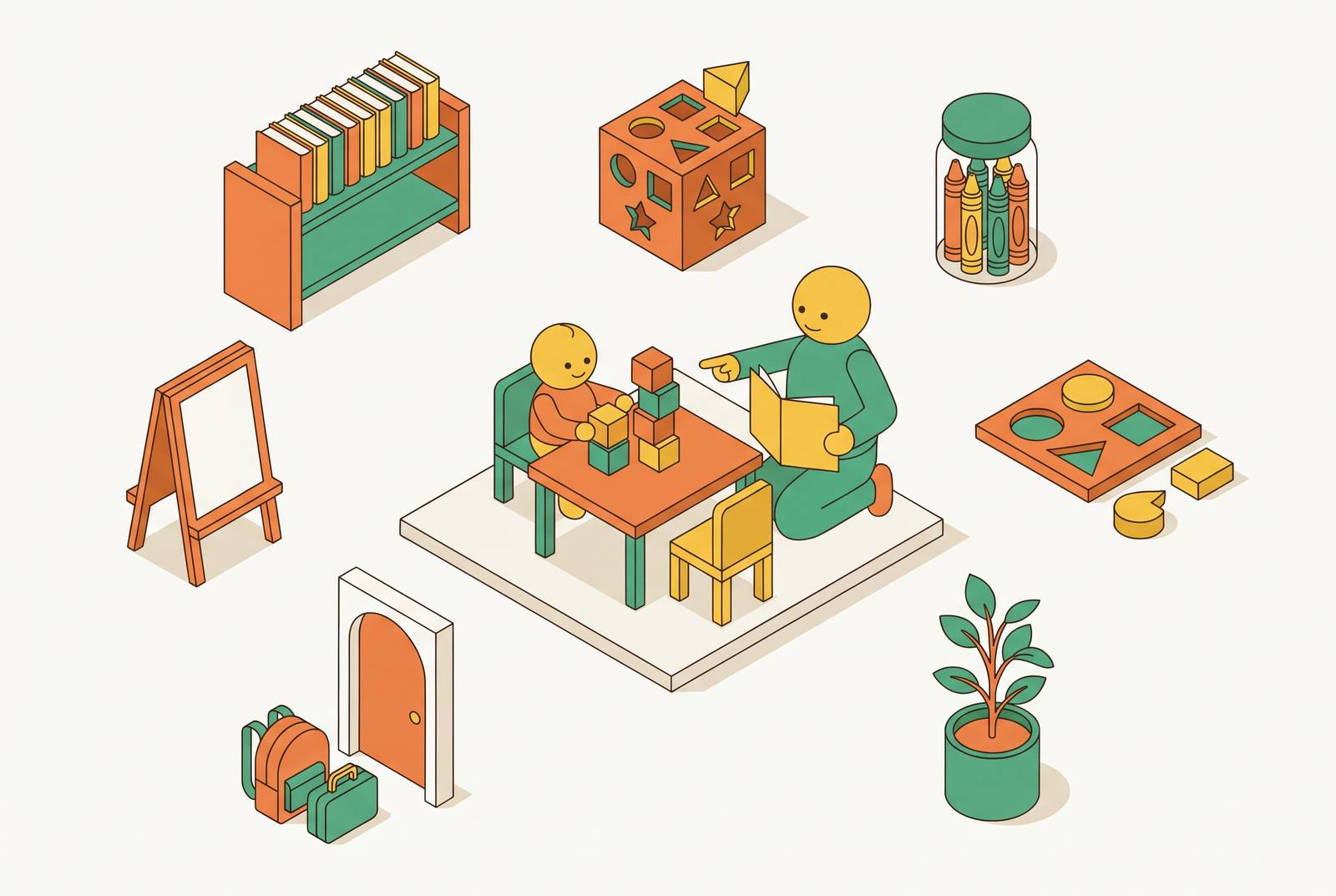
For example, breakfast or getting dressed can include counting and pattern play. A child can count objects on the table or help sort clothes, with a quantity comparison added when it fits. Later, imaginative play can make room for rhymes, clapping syllables, or noticing a familiar word’s first sound. The activity stays part of the play. There is no need to interrupt it for a formal explanation of the skill being practiced.
A daily read-aloud of one or two books provides another dependable anchor. Parents can pause over an unfamiliar word, use the picture to explore its meaning, and ask what the child thinks might happen next. Conversation can continue beyond the book. When the child offers a short answer, the adult can build on it and invite another turn.
Letter-sound exploration can stay short and physical, using magnetic letters, drawing in sand, or tracing with a finger. Objects the child knows can help them link the letters to sounds they already know. Togetherness is the right feel for this routine. A child’s eagerness to return to the activities is a useful sign of engagement, while growing skill gives parents a separate way to judge progress.
What app can help a 4-year-old learn letters and numbers before kindergarten?
An app can help when it teaches a defined skill and responds meaningfully to the child. A purposeful AI tool that listens, responds, and adapts can support listening, vocabulary, letter recognition, and storytelling in ways a passive content library cannot.
For parents choosing an app, meaningful interactivity is the first criterion. The tool should respond to what the child actually does rather than deliver the same material regardless of the response. Curriculum alignment is the next test. Reading content should connect phonemic awareness, phonics, vocabulary, and comprehension in a clear progression, while math content should follow recognized early numeracy progressions. A collection of letter and number activities is not automatically a coherent learning sequence.
Parents need to know which skills a child is building and where gaps remain. Privacy deserves equal scrutiny. Very young children cannot consent to data collection, so parents need to know that voice and behavioral data are protected. An app’s ability to listen is a teaching feature and a reason to examine how that data is protected.
Even a responsive tool has limits. An overly prescriptive algorithm can narrow learning by keeping a child on predetermined paths and limiting open-ended exploration. Children still need direct experience with people and objects. Adult participation makes digital learning more useful, so the strongest role for an app is shared practice rather than a standalone replacement for conversation or play.
A purpose-built AI teacher can offer a meaningful upgrade over a quiz app when it adapts moment to moment and teaches both reading foundations and early math. The notes here do not establish a named best app. Parents can judge any option by what it teaches, how it responds, what its reports reveal, and what remains protected.
What to watch for as your child develops — signs readiness is building, signs to act on early
Progress becomes easier to recognize when parents know which foundations to watch. By ages four to five, signs can include enjoying rhymes, noticing when words sound alike or different, and beginning to recognize some letters, especially those in the child’s name. Interest in books and requests to be read to are useful signs too.
Math and conversation offer their own clues. A child may count small groups of objects more accurately and begin to understand “more” and “less.” Back-and-forth exchanges may last longer, with fuller answers to simple questions. Parents can see these changes during things they often do with their child.
Difficulty noticing rhymes or separating words into syllables by age four or five can signal a need for support. So can little interest in books or letters despite regular exposure, difficulty counting objects reliably, or trouble comparing quantities. Other reasons to ask for help include vocabulary that grows little compared with that of children the same age and a lot of trouble following multi-step instructions.
For parents noticing those difficulties, support may include a richer home routine, a well-designed adaptive tool, or a conversation with a pediatrician or early childhood specialist. Pre-reading skills can reveal a risk of later decoding difficulty before a child can read words. There is no need to wait for school to notice. Kindergarten readiness is built day by day, and ordinary moments at home give parents both a place to strengthen it and a chance to recognize when more help would be useful.
Sources
- Bringing the Reading Sciences Into the Classroom: Insights for Phonics Instruction - Tobias Ungerer, Kathleen Rastle, Blair C. Armstrong, 2026
- What the science of reading tells us about how to teach decoding—including phonics - Teach. Learn. Grow.
- Volume 11 Issue 1 Literacy in Education Article 7 March 2026
- Building a Strong Math Foundation: Supporting Early Math Precursors for Babies and Toddlers
- Fostering toddlers’ numeracy and mathematical language skills through a professional development intervention on interaction quality in toddler classrooms - ScienceDirect