Personalized Learning vs. Differentiated Instruction in K–2 Classrooms
Teachers and tech both play essential roles in early literacy instruction.
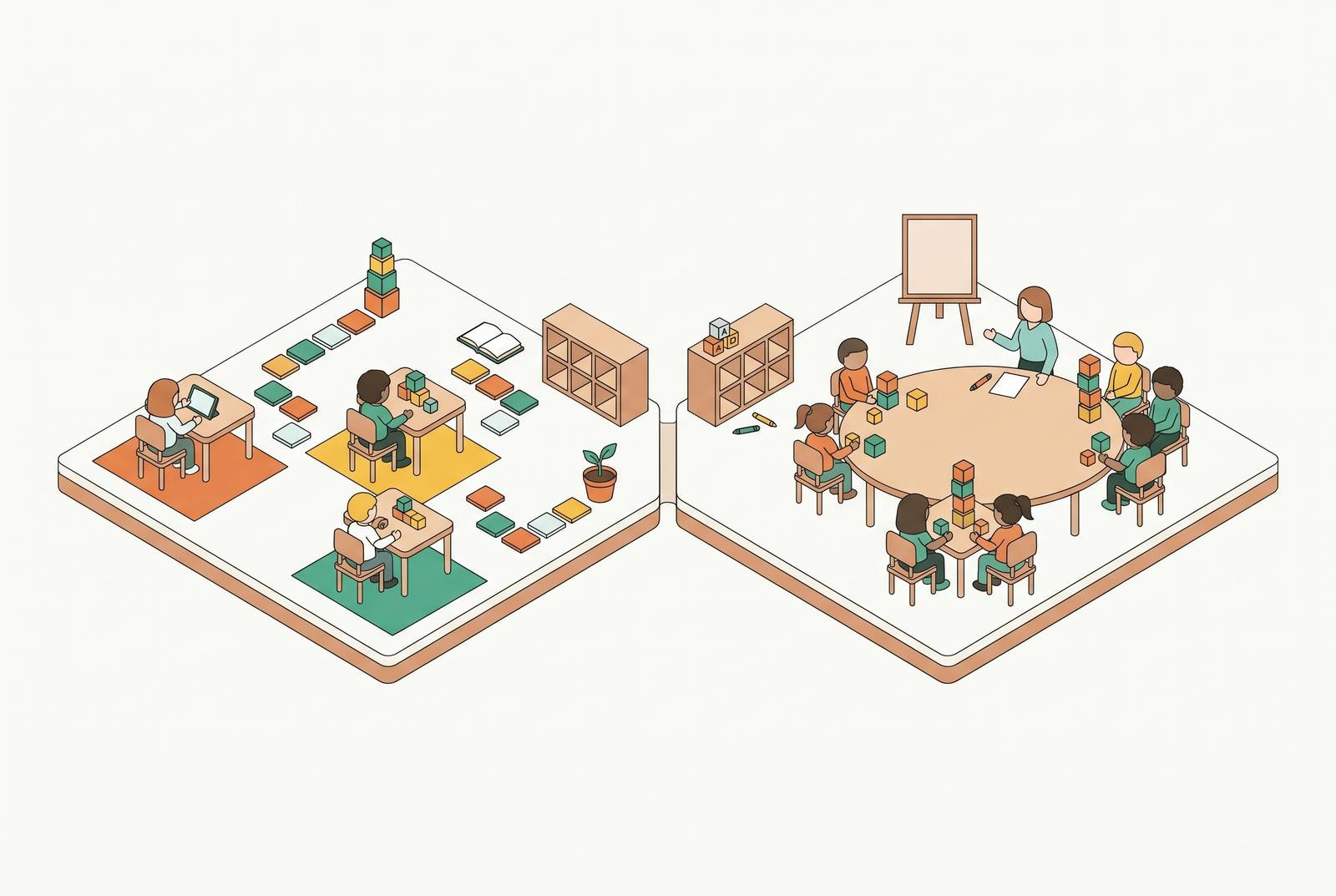
Differentiated instruction means the teacher adjusts how children reach a shared goal, while personalized learning gives the learner more influence over pace, pathway, and sometimes goals. In K–2, both still need strong adult guidance. A personalized AI tutor for reading and math should change how it teaches and make progress visible to families.
Why "one-size-fits-all" teaching keeps failing young learners
Children arrive in kindergarten with different language backgrounds, schooling histories, prior knowledge, and levels of emotional readiness, and that spread has widened in recent years. Some are ready for more complex reading while others are still developing the skills needed to decode words. Giving children the same material at the same pace leaves some struggling to keep up and others waiting for something worth their effort.
Many teaching resources are built for an imagined average learner rather than the range of children actually sitting in the room. FACET’s research paper describes how hard it is to meet children’s different cognitive, motivational, and emotional needs when teachers have little time and few resources. Teachers must make up for that by changing the materials and how they teach. The distance between sound teaching principles and everyday classroom practice is a documented implementation problem.
That leaves families with a reasonable concern. A lesson can be suitable for the grade without being suitable for a particular child’s next step. Moving everyone forward together may look orderly, but it does not mean everyone has learned what they need. So what does it actually look like when instruction does adapt?
What differentiated instruction actually is — and what it is not
Differentiated instruction, often shortened to DI, is teacher-driven. The teacher adjusts curriculum, teaching methods, resources, and assessments in response to children’s readiness, interests, and learning profiles. The core learning objective stays the same. In a phonics lesson, for example, two groups might practice the same target skill with texts that differ in complexity and with more or less help from the teacher.
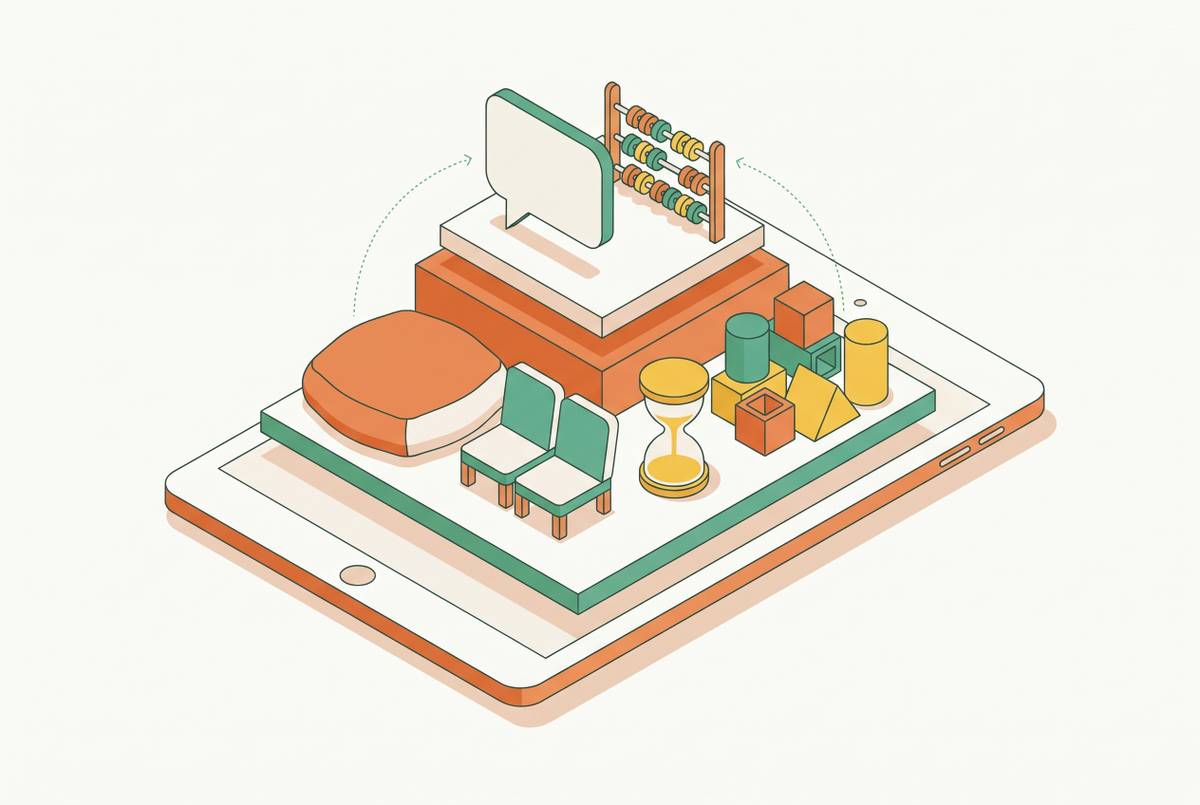
Carol Ann Tomlinson’s framework identifies four entry points for differentiation, which are content, process, product, and environment. Content is the material children receive, while process is how they work through it. Product is how they show what they have learned. Environment covers where children learn and how they take part in the learning. These distinctions give teachers more options than simply replacing a hard worksheet with an easier one.
DI is not tracking children into permanent ability groups. Groups change with the task, the skill, and the child’s progress. Nor does differentiation mean giving more work to children who are ahead or lowering standards for those who need help. Children can work toward the same goal through different pathways, with changes in pacing, scaffolding, and how they show what they understand. Teachers make those choices based on ongoing formative assessment, which checks what children are learning as they are taught, rather than on a fixed calendar or a label given to a child.
What personalized learning adds — and how it differs from DI
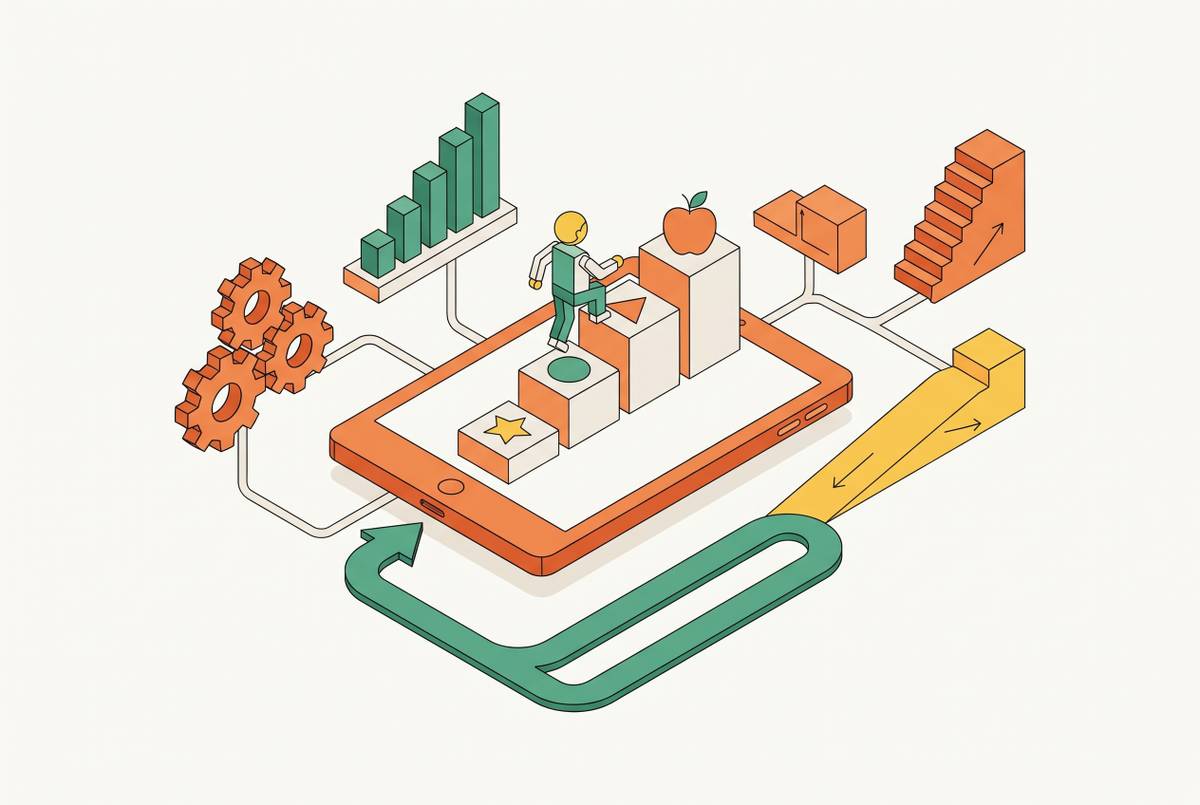
In DI, the teacher decides how to adapt instruction toward shared objectives. In personalized learning, the student takes a more active role in pace, pathway, and sometimes the goals themselves. The distinction is not simply how much instruction changes, but whose needs and choices shape those changes.
The two approaches can work together in practice. A teacher can use differentiated instruction as one strategy within a broader personalized learning approach. Teacher-led adjustments do not disappear when children gain more choice. Instead, those adjustments can support a learning experience that responds more closely to each learner. Personalization is therefore not a replacement for good classroom teaching or a synonym for using an app.
For K–2, however, student agency needs careful limits. Children aged 4–8 are still developing the ability to understand their own thinking, judge what they know, and direct their learning. They continue to depend heavily on adults to structure choices and provide support. A child choosing reading material is participating in learning, but that does not mean the child can plan a sound reading sequence.
Why the K–2 window makes both approaches especially high-stakes
Children go from pre-reading skills to decoding, fluency, and early comprehension, while in math they go from basic number sense to structured numeracy. These skills do not form an interchangeable set of activities. The order matters because children need what they learn first to do the work that comes later. Children in the same classroom may be at genuinely different points in that progression.
In reading, explicit and systematic phonics instruction builds decoding. Explicit means that teachers show and clearly explain sound-letter relationships rather than leave children to work them out on their own. Systematic means that teaching follows a planned sequence from simpler skills to more complex ones. The Science of Reading establishes the need for both. Decoding then supports fluency, which helps children read for meaning.
Rushing that sequence can leave gaps that compound. A child who has not mastered decoding needs instruction at that point. The same holds when a child is pushed into computation before they have a firm grasp of number sense. Adaptation is therefore more than a way to keep children interested. It allows instruction to meet children at the point where the next skill can actually take hold, without holding back classmates who are ready to advance.
What DI looks like in practice in a K–2 classroom
A differentiated reading lesson might focus on decoding consonant blends. One group works with more complex text and little scaffolding, another uses sentence frames and student-friendly phonics cues, and a third receives direct instruction in a small group with the teacher. All are working toward the same objective. Text complexity, vocabulary load, and the number of sound-letter correspondences introduced at once can change according to readiness.
Practice can also take more than one form. Rhyming games, syllable clapping, and word-building activities offer different ways to work on early sound and word skills. Children can show what they understand through pointing, speaking, writing, or building words. The environment can change too, through a quieter corner, a small-group pull-aside, or a one-on-one moment with the teacher. These are concrete adjustments to how a child accesses and demonstrates learning.
Which group a child joins should depend on the skill they are practicing. A strong decoder who is hesitant about writing does not belong in a single permanent ability tier. That child may need one kind of support during reading and another during writing, with both changing as skills develop. Keeping those decisions current requires teachers to monitor learning and adjust materials, groups, and feedback. Doing all of that across a full classroom creates the practical opening for technology-assisted personalization.
Where technology-assisted personalization fits — and where it falls short
Adaptive technology can track an individual child’s responses in real time and adjust the next instructional step. It can change difficulty, sequencing, pacing, or feedback without waiting for a later assessment. A teacher managing a full classroom cannot provide that continuous individual response to every child at once. But speed of response is not the same as quality of teaching.
Some adaptive apps only change the difficulty level. In adaptive quizzing, a child who does not understand a concept may get an easier version of the same task without receiving a different explanation. The stronger distinction is whether a tool changes what it teaches next, how it teaches, and when it judges the child ready to move on. Correct and incorrect answers are useful signals, but responding to them with harder or easier questions is a narrow form of personalization.
Generic AI tools bring other risks for young learners. They can present incorrect information confidently, reinforce misconceptions, and raise privacy concerns around sensitive student data. Children are also prone to treating AI systems as if they were people and seeking emotional reassurance from them. A tool can simulate warmth without genuinely providing human care. These limits explain why instructional design and adult guidance remain essential even when the software responds quickly.
How do you find an AI tutor that genuinely adapts to your child’s reading and math level?
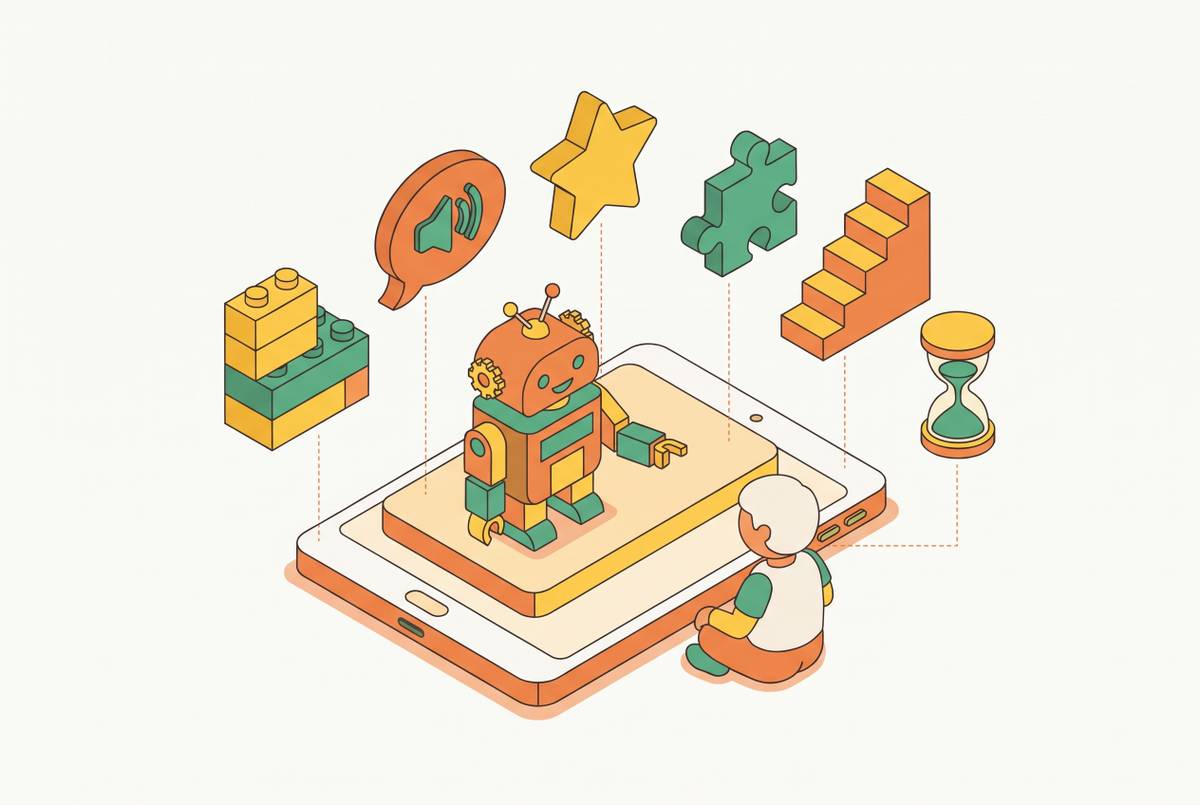
For a young child, a genuinely instructional tool should respond to what the child is doing with a different teaching approach when needed. An explanation that helps a concept make sense is especially important for children who are behind or resistant and need support without judgment. Children who are ahead need a tool that lets them move on rather than keep practicing what they already understand.
To assess a tool, parents and educators should start with its curriculum. Reading instruction should follow the Science of Reading through explicit, systematic phonics, while math should follow a structured sequence aligned to grade-level standards. Responsiveness should happen during the learning. For reading, voice and language processing are also central. If a tool cannot hear a child read, a tap on the right answer cannot tell it about the child’s spoken decoding accuracy, fluency, or phrasing.
Families should be able to see progress and understand which skills the child is working on, rather than having that information locked inside the app. The learning environment should also be free of ads and in-app purchasing pressure. For ages 4–8, commercial prompts should not compete with instruction for attention. Together, these criteria distinguish a tool designed to teach from a digital worksheet with an adaptive label.
There is no basis here for a ranked product recommendation. The better comparison is between what tools actually do for the child’s current need. For reading practice, hearing and responding to the child’s reading is more informative than answer selection alone. For math, a structured sequence and a changed teaching approach are more useful than difficulty adjustment alone when understanding breaks down.
How parents can reinforce adaptive instruction at home
Home practice works best when it supports the same learning approach as school. A child who practices decoding in class but is told to “just guess” at home receives conflicting signals. To keep support aligned, parents can ask the teacher which skill the child is learning or check the app’s progress report. That gives home practice a clear focus. The aim is not to recreate the classroom, but to give current learning another low-pressure chance to settle.
Within that focus, children can still have meaningful choice. Letting them select graphic novels, joke books, or guides about topics they enjoy can build motivation and the habit of reading. When an unfamiliar word appears, parents can pause rather than immediately supply it, encouraging the child to slow down and sound it out. Short, consistent sessions are better than infrequent long ones. Brief daily reading makes practice manageable while helping children build stamina.
Rhyming games, syllable clapping, and word-building activities extend early sound and word learning without turning home into another lesson block. Reading difficulty is not a measure of intelligence, and many children need more repetition, more varied practice, and more time. Parents can give children that practice and time without making them feel behind. When home reinforces the skill being taught at school or in a well-designed app, the child gets room to consolidate learning.